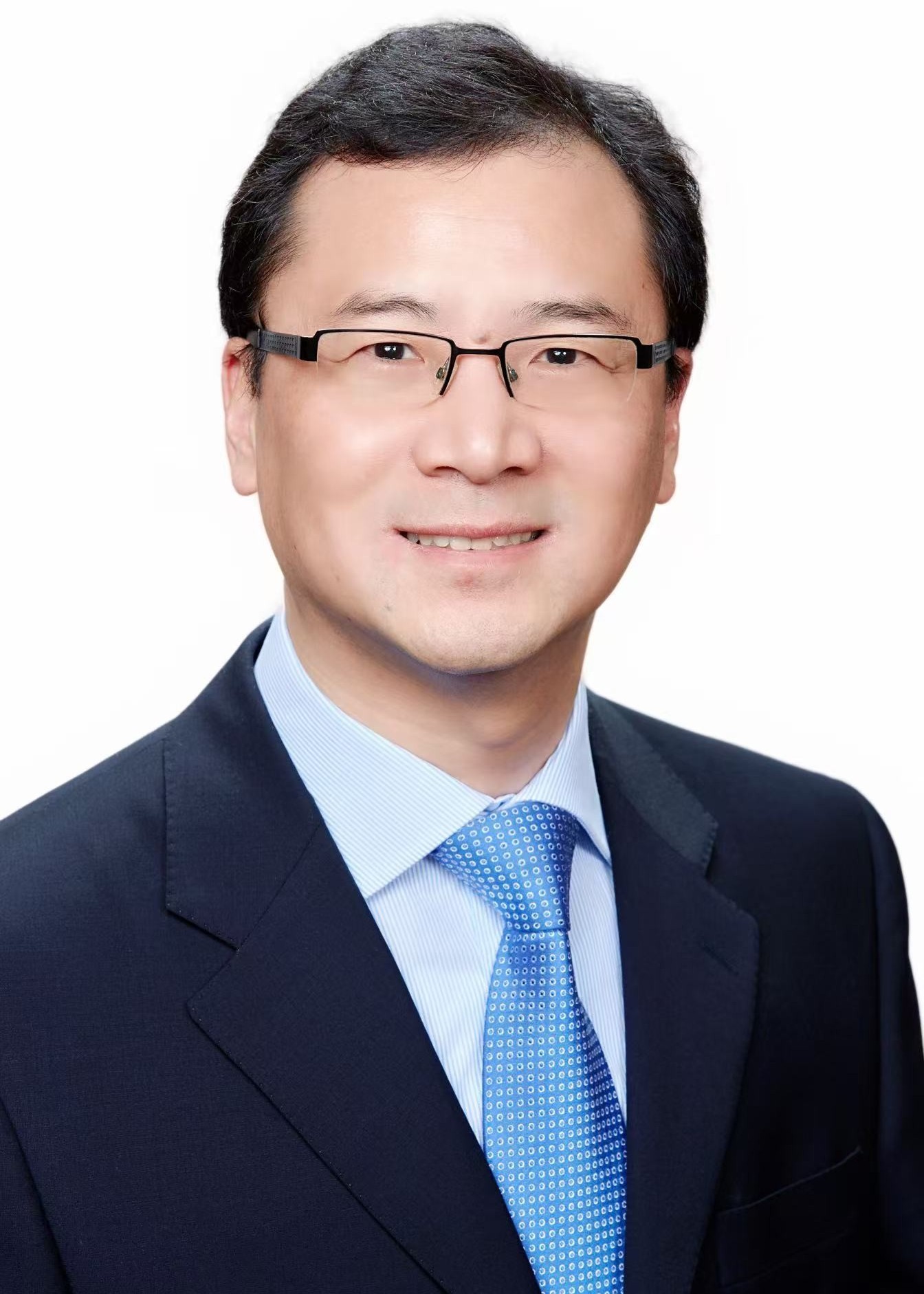
Dan Zhang, Professor
Director of PolyU-Nanjing Technology and Innovation Research Institute, China
Biography: Professor Dan Zhang is a Fellow of the Canadian Academy of Engineering, a Fellow of the Engineering Institute of Canada, a Fellow of the American Society of Mechanical Engineers, and a Fellow of the Canadian Society for Mechanical Engineering. He currently serves as Chair Professor of Intelligent Robotics and Automation at The Hong Kong Polytechnic University, Director of the Research Centre for Intelligent Robotics, and President of The Hong Kong Polytechnic University (Nanjing) Technology and Innovation Research Institute. Professor Zhang has twice been awarded the prestigious Canada Research Chair. He has also received numerous honors, including the Ontario Premier’s Award, the Tier 1 York Research Chair in Advanced Robotics and Mechatronics, the Lassonde Innovation Award, and the Chang Jiang Scholars Program Chair Professorship. He has long been dedicated to the fields of intelligent robotics and automation and is internationally recognized as a leading scholar in parallel robotics and modern manufacturing systems. His main research interests include the synthesis and optimization of parallel and hybrid mechanisms, generalized parallel robots, reconfigurable robots, intelligent biomedical instruments, aerial and underwater robots, embodied intelligence, and AI-robotics systems. To date, he has published more than 516 high-quality academic papers and 12 scholarly monographs. His work has received over 13,632 citations on Google Scholar, with an H-index of 55. Since 2020, he has been listed for six consecutive years among Stanford University’s “World’s Top 2% Scientists.” He holds more than 40 Chinese patents, has led the development of multiple core technologies and their clinical and industrial applications, and has served as principal investigator for research projects totaling more than CAD 26 million. His work has made significant international impact in both academic research and engineering applications.
 Yang.jpg)
Chenguang Yang, Professor
The Hong Kong Polytechnic University, China
Biography: Chenguang (Charlie) Yang is a Professor with the Department of Computing at The Hong Kong Polytechnic University, Previously, he held professorships at University of Liverpool, University of the West of England (UWE Bristol) as well as South China University of Technology. He holds fellowships with Institute of Electrical and Electronics Engineers (IEEE), Institute of Engineering and Technology (IET), Institution of Mechanical Engineers (IMechE), and Aisa-Pacific AI Association (AAIA). He is a member of European Academy of Sciences and Arts (EASA) and a member of National Academy of Artificial Intelligence (NAAI). Professor Yang was selected as a Featured Author on IEEE Xplore in 2023. As lead author, he received the IEEE Transactions on Robotics Best Paper Award in 2012 and IEEE Transactions on Neural Networks and Learning Systems Outstanding Paper Award in 2022. He also was a lead contributor to the 1st Prize of Chinese Association of Automation (CAA) Natural Science Award in 2022. His current research focuses on embodied AI for robot learning, human robot interaction, and intelligent system design.
Speech Title: Human-like Robot Control, Skill Learning, and Human–Robot Collaboration
Abstract: The presenter proposed a safe contact-control method with humanoid-like compliance adjustment, developed a generalization framework for skill learning in force–position coupled manipulation, investigated optimization mechanisms for personalized collaboration strategies, and developed human–robot collaboration techniques with dynamic adaptability. Addressing core bottlenecks in force-contact tasks—namely the lack of coupled representation of force and position information and the separation between skill learning and low-level control—he proposed a multi-modal, comprehensive skill primitive system covering motion, force control, stiffness, and manipulability, and established a unified skill representation for force–position coupled manipulation. The presenter’s work integrates adaptive control into skill learning algorithms, fully leveraging adaptive control’s ability to compensate for uncertainties and thereby enhancing skill generalization in previously unknown scenarios.
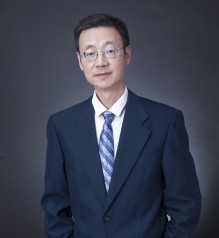
Aiguo Song, Professor
Southeast University, China
Biography: TBA